Launching
Whole surging sophistication among state-of-the-art autos compels a thorough careful perception of diagnostic methods, particularly about On-Board Diagnostics II (OBD2) and Tire Pressure Monitoring Networks (TPMS). Over Europe, Asia, and the US, these developments perform using diverse frequencies. OBD2 specifications are largely standardized globally, predominantly utilizing ISO 9141-50, KWP2000, CAN, and others, but regional executions can introduce minor variations. TPMS, however, is where notable frequency variations arise. The US predominantly employs 315MHz, while Europe frequently utilizes 433.92MHz, and Asia exposes a more multifaceted range including both frequencies and further bands. Accordingly, exact diagnostic devices must be equipped with the facility to understand these manifold frequencies to aid effective repair and maintenance.
Decoding TPMS Sensor Frequencies: A Global Guide (Europe, North America, Asia)
Mastering tire observing device (TPMS) probe channels through the planet can be tough. Commonly, North states principally utilize 315 MHz, nonetheless some recent vehicles employ 433 MHz. Nonetheless, Europe and most of Asia chiefly work on the 433 MHz transmission, with some district variations found significantly in distinct Asian regions. Consequently, critical to confirm the precise wavelength before securing TPMS modules to validate alignment and prevent feasible complications.
Battery Car Readers: OBD2 Compatibility and TPMS Integration
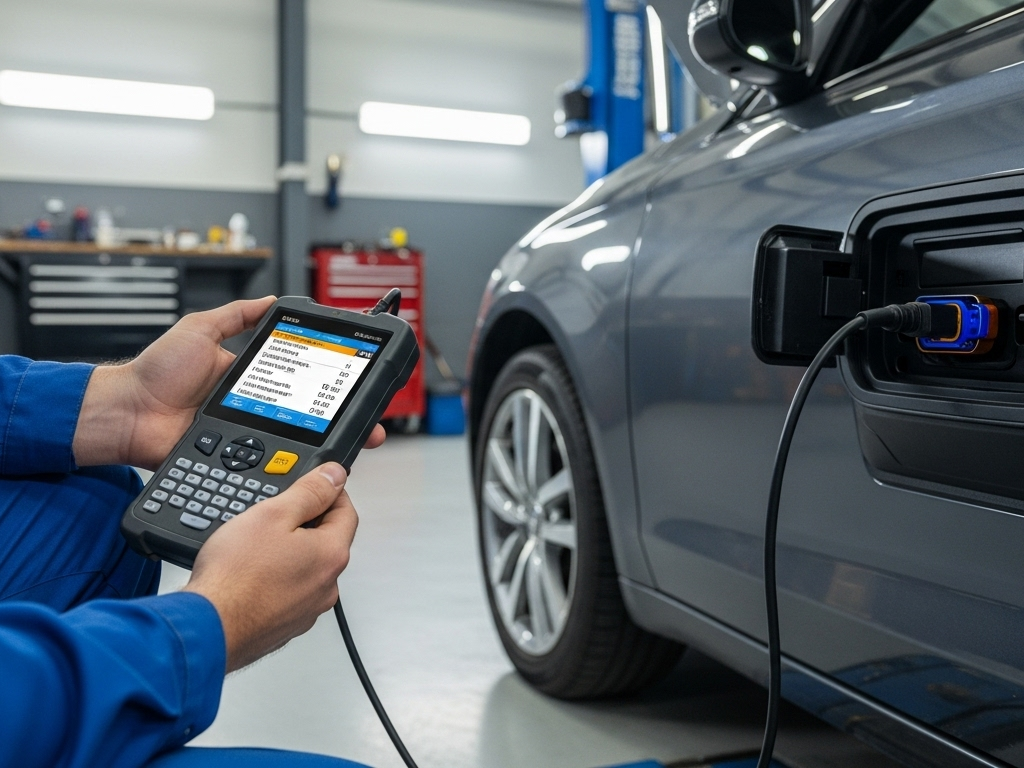
Cutting-edge electrical car testing devices are increasingly incorporating necessary functionality, regarding focused on both universal On-Board Diagnostics II (OBD2) functionality and Tire Pressure Monitoring System (TPMS) linking. A lot of EV machines utilize OBD2 ports for retrieving primary system statistics, letting technicians and owners to pinpoint emerging faults. Furthermore, consistent TPMS linking provides valid tire compression values, fostering to improved defense and diesel economy. This mixture of OBD2 reception and TPMS functionality exemplifies a consequential improvement in electrified ride diagnosis.
TPMS Frequency Changes: Eurozone vs. The US vs. Far East - A Complete Comparison
These platforms responsible for supervising tire stress—TPMS—operate on separate radio spectrum, leading to considerable regional discrepancies. North America predominantly utilizes 315 MHz, though some updated vehicles are moving to 433 MHz. Continental Europe mandates 433.92 MHz, a exact frequency to certify compatibility across countries. Many Asian countries exhibits a fragmented landscape, with distinct territories using 315 MHz, others 433 MHz, and still other territories employing a aggregation of both. This disparity presents challenges for service centers and operators when dealing with replacement TPMS devices or diagnostic instruments, obliging careful inspection of regional criteria to sidestep troubles and warrant proper efficiency of the TPMS.
Vehicle Scanners for Electric Vehicles: TPMS Diagnostics & Signal Analysis
State-of-the-art transport inspectors are continually developing to facilitate electrified autos, especially regarding tire pressure monitoring diagnostics. Unlike fuel combustion transport units, electric transport present particular difficulties when it comes to tire monitoring system evaluation. Many electric autos use alternated tire pressure diagnostics broadcasts requiring the reader to precisely recognize the transmission in use. This ability enables experts to merely view tire pressure but also discover the accurate radio signal being beamed by the monitoring network devices, contributing in exact identification of defects.
Asia Tire Monitoring Wavelengths: Which Ought to Be Aware Of?
Dealing with the world of car TPMS can be a headache, primarily due to the varying signals utilized across Western Europe, Asia, and the United States. The EU’s vehicles predominantly use 433.92 MHz, while diverse Asian countries employ 315 MHz and 433.92 MHz, creating a complicated situation for service providers. In the US, both 315 MHz and 433.92 MHz are normal, with 315 MHz being more widespread. Accordingly, understanding these regional variations is required for accurately troubleshooting TPMS concerns and selecting the appropriate programming tools.
Progressing a Key Concepts: Vehicle Diagnostics, Renewable-Powered Cars, combined with Tire Pressure Monitoring System Apparatus Frequency Classification
Pertaining to seasoned mobile unit technicians, only learning a key aspects about motor vehicle inspection, electrified ride systems, combined with air pressure detection sensor wave deciphering amounts to an decisive developed step. That categories explore into routine methods, entailing particular tools plus proficiency with the aim of unerringly diagnose even correct tough barriers dependent on tire air, electric framework capacity, together with propulsion system issue readings. Furthermore, correctly recognizing pressure sensor unit transmissions – often fluctuate among particular producers plus types – usually indispensable for proper synchronization.
Battery Car Troubleshooting: Using OBD2 Scanners to Troubleshoot TPMS
Fixing Tire Pressure Monitoring Systems tire monitoring in electric vehicles electric automobiles often necessitates more than just visual inspection. Modern OBD2 checkers offer significant ability to collect TPMS data and spot potential failures. Utilizing these instruments, technicians can interpret fault codes, check sensor function, and even apply sensor analyses, allowing for rapid diagnosis of pressure detection problems and minimizing outage periods. It is is especially valuable given the surging complexity of EV architecture.
Handling TPMS Wavelengths: A Detailed Handbook for the Continent, Asian Subcontinent, and American Continent
Efficiently utilizing pressure detection units all over the EU, Asia, and American Continent necessitates a thorough command of the distinct spectrum allocations they apply. Distinct from a even system, the world often maintains specific bandwidths. To illustrate the EU essentially employs hundreds fifteen tpms frequency europe asia us MHz and 433.92 MHz band, while the US & Canada often employs three-one-five MHz although certain latest vehicles might contain 433.92 MHz. Asia-Pacific exhibits a more fragmented context, with multiple frequency bands engaged, reliant on the state and transport maker.
- Check local legislations regarding TPMS frequency.
- View your automobile manual for specific frequency.
- Use a pressure detecting scanner ready to interpreting diverse signals.