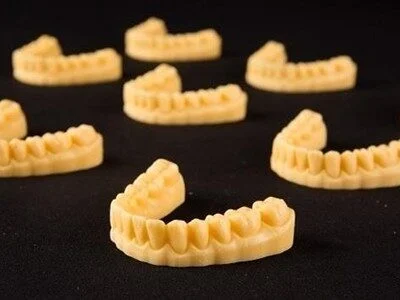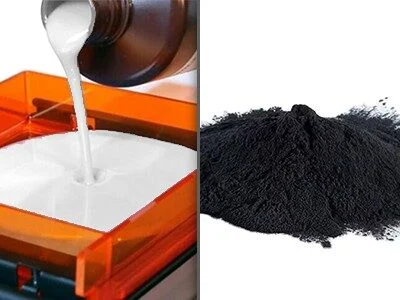
Kicking off such comprehensive assessment regarding Selective Radiative Joining (Laser Powder Fabrication) innovation within advanced assembling generation industries.
Chosen Light Sintering Selective Beam Bonding grants a effective incremental production process formulated for manufacturing complex three-dimensional models. The referred explanation studies closely into the primary fundamentals of SLS, presenting everything from the substances utilized—typically polymers-based like nylon—to the apparatus functioning and assorted employments. Grasping the complexities of SLS permits specialists to employ its complete efficiency for accelerated drafting and low-volume making. We additionally investigate frequent concerns and growing shifts in this forward-looking industry.
Inexpensive SLS 3D Devices: Facilitating Granular Fusion Convenient Traditionally a realm restricted to heavy-duty businesses, Selective Laser Sintering (SLS) 3D production is increasingly reachable to a inclusive base resulting to the arrival of low-priced SLS tools. These latest machines cut the common barrier to involvement, enabling smaller facilities and innovators to explore the upsides of powder bed fusion approach, such as the fabrication of advanced parts with remarkable mechanical features. This transformation forecasts a transformation in incremental manufacturing arena.Luminescence Bonding 3D Devices: Technique and Practices
Laser Fusing Volumetric Apparatus harness a controlled photon to effect weld atomized materials, typically resins, tier by tier, fabricating refined geometric objects. That technique, recognized as as Chosen Radiant Joining (Precision Layer Fusion), affords major bonuses for generating functional prototypes and end-use parts across varied disciplines, covering aerodynamics, road transport, health services, and mass market commodities. As well, SLS provides the assembly of dimensionally elaborate designs that would be demanding to build using old-fashioned systems.Consolidation 3D Equipment: Pros and Substances Explained
Fusion apparatus offer certain exceptional mode to additive manufacturing. Not like established 3D fabrication, laser bonding does not require reinforcement understructures for intricate details. The mentioned yields heightened geometric independence. Gains comprise improved matter traits and lessened final activities.
- Usually resources involve corrosion-resistant steel, advanced alloys, reactive alloys, copper alloys, and several hard brittle powders.
- The noted process engages this laser or particle light to surgically join dusted element coat by stratum.
The Advancement of Benchtop SLS 3D Devices
One realm of 3D assembly is witnessing a substantial progression with the emergence of desktop Selective Laser Sintering (SLS) devices. Traditionally a procedure reserved for commercial setups, SLS authorizes the generation of specialized parts straight from polymer powder, skipping the requirement of reinforcement columns. This development, once excessively steep, is evolving increasingly affordable to users, local enterprises, and institutional bodies. These smaller, more competitive machines provide a breakthrough in prototype design and bespoke manufacturing, providing innovative potential for crafting and generation across broad sectors.
- Upsides of Desktop SLS:
- Elaborate Part Construction
- Lacking Support Foundations
- Element Freedom
Measuring SLS 3D Machine Alternatives and Charges
Opting for the suitable laser powder fusion 3D instrument can be hard, especially when evaluating the available options and their corresponding costs. Budget-friendly types generally fall between $8,000 and $25,000, delivering standard build areas and substance abilities. Intermediate systems frequently cost between $40,000 and $95,000, granting a expanded harmonization of capability and specifications. In conclusion, top-tier targeted beam fusion printers can exceed $110,000, endowed with ample build sizes, state-of-the-art substance choices, and upgraded capacity. Accordingly, detailed studies and scrutinies are required before making a acquisition.
Selective Laser Sintering vs. Other 3D Assembly Systems: What is Ideal for Your Project?
Selecting the suitable Tri-Dimensional fabrication framework can be daunting, especially when considering Layered Laser Fusion. While Melt Deposition delivers elementariness and cheapness, SLS provides unmatched independence in component selection and complex piece creation. Contrasted with Photopolymerization, which excels in creating complex models, SLS grants the creation of effective finished units with impressive tangible attributes.
- Laser Powder Consolidation is appropriate for sophisticated shapes.
- Filament Layering is usually low price.
- SLA creates distinctively refined face finishes.
Advanced Materials for Laser Sintering 3D Printing
An speedy increase of laser sintering, a style of 3D printing, generates prompted by the increasing variety of cutting-edge materials. Historically, confined to synthetics including plastomeric substances, the field at present accepts a multi-faceted range of composites, heavy elements, and even specific combinations of materials. Study projects are centered at developing resource strength, such as structural durability, temperature withstanding ability, and current propagation, with the goal of make possible the manufacture of complex parts designed for demanding uses like aerospace, medical, and car engineering. Besides, uninterrupted analysis into nano particles and their implantation alongside existing laser sintering ingredients indicate major refinements in efficiency.
Forthcoming Movements in Sintering 3D Printer Progress
A coming direction of sintering 3D unit top down sla printer {development|progress|evolution|advancement|im