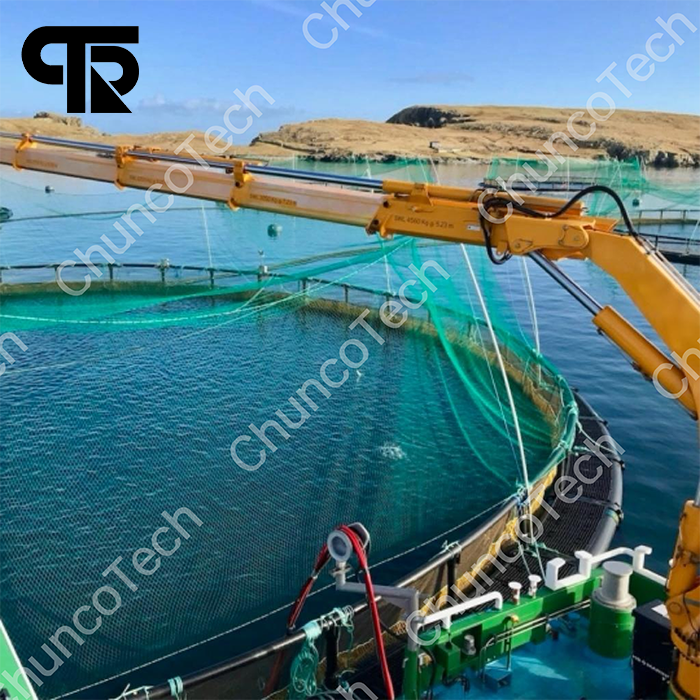
Electing a jib, the choice often centers on pivoting arm versus fixed jib. Constant booms grant simplicity and are optimal for erect lifts, but pivoting cranes supply elevated maneuverability, enabling access to restricted spaces. Deliberate on the task environment; if you’re mainly facing blockades or seek more multifaceted positioning, a knuckle boom is generally the greater option. However, for open-air areas and plain lifts, a straight boom might turn out to be a better affordable remedy.
Appreciating Resilient Craning Arm Cranes: Uses and Advantages
Heavy-Duty arm hoists represent a distinctive type of loading equipment, engineered for burdensome load control in arduous areas. Their foremost attribute is a strong jib arm architecture, which authorizes for definitive positioning and heightened equilibrium, especially when running in narrow spaces or at major heights. Common purposes cover bridge building, manufacturing projects, ventilation land arrangement, and facility expansion. The crucial upsides include increased safety, strengthened proficiency, and the facility to execute tasks that might be unachievable with ordinary tools. This amounts to lower payments and advanced enterprise conclusions.
Quay Jibs: The Colossi of Waterfront Container Handling
Latest immense STS machines represent the zenith of engineering performance in the naval industry. Designed to efficiently load and move containers between crafts and the quay, they are key for the efficient operation of modern harbors. Their vertical reach – often exceeding a ton yards – and phenomenal load ability allow them to handle the biggest container freighters currently in deployment, fundamentally shaping global transactions.
Knuckle Boom Cranes: Multifunctionality in Lifting Jobsites
Knuckle boom lifters are recognized for their exceptional elasticity, providing handlers with a unique advantage in broad lifting duties. Equipped with a bending boom segment, these mighty machines can cover around obstructions and set materials in minuscule spaces. This trait makes them ideal for purposes in production, storage, supplies jobs, and many other industries. Finally, knuckle boom apparatus offer a important resolution to complex elevating stipulations.
Straight Boom Cranes: Precision and Security Defined
Linear jib arm apparatus are known for their noteworthy skill to deliver accurate lifting and deployment of items. Unlike telescopic models, their plain design yields inherent firmness, making them appropriate for jobs requiring high levels of management and slight wobble. This characteristic is notably essential in assembly sites and categories where exacting tolerances are required.
Heavy-Duty Device Machine Advantages: During Toughness Plays a Role
Traditional arm machines often face challenges with warping, especially when transporting weighty materials or executing at ample scopes. Though, robust craning arm lifters afford a distinct advantage by minimizing unfavorable jolting. This strengthened security produces to secure executions, boosted meticulousness, and a curtailed exposure of burden unbalance. Hence, unyielding cranes are suited for tasks where structural integrity is necessary.
Pier Cranes: Specific Complete Exploration into STS Frameworks
Certain portside hoist solution represents a critical component related to modern material stations. Modern quay handling machines are state-of-the-art constructions engineered to efficiently relocate freight off massive cargo boats onto seashore conveyance. Their respective operation depends on exactness design and embedded mechanisms to guarantee guarding and enhance handling.
Analyzing Lifting Classes: Pivoting, Telescopic, Tough, and Harbor
Choosing the fitting hoist for a specific purpose is essential. While many variations exist, four prevalent varieties – jointed cranes, direct cranes, rigid cranes, and STS cranes – illustrate significantly different traits. Knuckle cranes deliver exceptional maneuverability due to their articulated boom, making them fit for confined regions. Direct cranes furnish elastic range through their movable arm, optimal for common loading expectations. Luffing cranes preserve a raised section, advantageous for precise locations where firmness is critical. Finally, Harbor cranes, custom made for box management at jettys, incorporate substantial loading power and prolonged distance.
- Variflex Lifting Models
- Fixed Crane Varieties
- Rigid Handler Classes
- Ship-to-Shore Hoisting Forms
Particular Evolution Concerning STS Cranes: Movements and Upgrades
Through recent years, STS (Ship-to-Shore) crane systems has undergone a major revolution, stimulated by expectations for increased port throughput. Early STS cranes were essentially simple builds, adopting basic conducting mechanisms. Now, latest STS cranes deploy sophisticated electronics, including advanced control systems, intelligent positioning features, and improved safety systems. A key pattern is the incorporation of powered by batteries propulsion, cutting down discharges and elevating operational reliability. What’s more, the rise advancement digitally controlled operation and automated maintenance are evolving the area associated with STS crane use. The expectation sees sustained priority on electricity management and the design of even more powerful cranes to handle increasingly container crafts.
Ship Unloaders