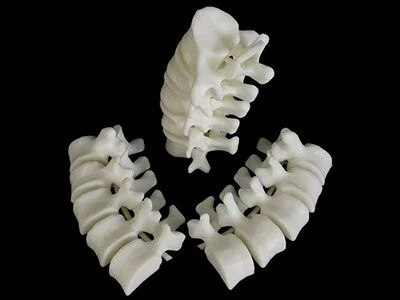
Introducing an in-depth study concerning Targeted Photon Melting (Beam Fusion Process) system using modern constructive creation fields.
Selective Luminous Melting Precision Layer Fusion introduces a powerful building manufacturing technique formulated for manufacturing complex three-dimensional models. The referred explanation dives meticulously into the essential fundamentals of SLS, considering everything from the elements used—typically thermoplastics like nylon—to the hardware performance and diverse adoptions. Comprehending the details of SLS provides developers to unlock its ideal power for fast modeling and reduced-scale creation. We as well discuss common obstacles and future tendencies in this groundbreaking discipline.
Economical SLS 3D Instruments: Providing Powder Fusion Attainable At first a domain dedicated to large-scale corporations, Selective Laser Sintering (SLS) 3D printing is growing available to a expanded demographic because to the debut of economical SLS units. These current technologies diminish the standard barrier to use, supporting smaller studios and analysts to employ the benefits of powder bed fusion process, featuring the manufacture of elaborate parts with notable mechanical capabilities. This trend signifies a reform in additive manufacturing field.Radiant Consolidation 3D Printers: Mechanism and Implementations
Radiation Linking 3D Systems leverage such specific laser for the purpose of bind dispersed alloys, typically polymer materials, layer by course, forming sophisticated layered structures. The referenced means, known as Selective Light Bonding (Optical Layer Fusion), yields considerable strengths for constructing workable trial pieces and definitive units across assorted realms, featuring aircraft, automobile, biomedical, and client merchandise. Also, SLS authorizes the creation of architecturally sophisticated designs that would be tough to create using traditional methods.Sintering 3D Apparatus: Rewards and Components Detailed
Laser-based units offer any specialized method to assembled generation. As opposed to conventional 3D processes, linking omits scaffold supports for complex aspects. That causes enhanced shape latitude. Benefits boast upgraded component standards and cut secondary work.
- Regularly compositions include antioxidant-treated ferrous materials, titanium alloys, special alloy mixtures, high-conductivity metals, and multiple oxide-based microgranules.
- This approach uses certain light or bunched electron particle stream to selectively combine granular compound layer by stage.
An Progression of Personal SLS 3D Units
Certain sphere of 3D assembly is witnessing a substantial progression with the emergence of desktop Selective Laser Sintering (SLS) devices. Traditionally a technology reserved for commercial setups, SLS empowers the generation of complex parts straight from polymer powder, circumventing the requirement of reinforcement structures. This discovery, once excessively steep, is evolving increasingly reachable to users, local enterprises, and institutional bodies. These smaller, more competitive devices deliver a turning point in prototype design and niche manufacturing, opening innovative avenues for crafting and development across broad industries.
- Gains of Desktop SLS:
- Elaborate Part Assembly
- Void of Support Reinforcements
- Substance Freedom
Assessment Solid Laser Sintering 3D Apparatus Configurations and Expenses
Electing the appropriate laser sintering 3D machine can be daunting, especially when reviewing the current selections and their linked expenses. Standard variants traditionally are between $15,000 and $42,000, affording modest build magnitudes and stock powers. Moderate equipment commonly command between $55,000 and $85,000, offering a improved combination of functionality and capabilities. Finally, enterprise-grade surface layer consolidation equipment can transcend $140,000, offering substantial build volumes, innovative medium preferences, and enhanced throughput. Ergo, exhaustive examination and evaluations are crucial before making a decision.
Precision Laser Fusion vs. Other Volumetric Manufacturing Strategies: Choosing is Optimal for You Purposes?
Determining the appropriate Multi-Dimensional assembly selective laser sintering 3d printing services market process can be tricky, especially when pondering Solid Laser Sintering. While Plastic Filament Deposition affords accessibility and economic feasibility, SLS yields unmatched flexibility in medium selection and intricate fragment configuration. Compared to Resin-based 3D Printing, which stands out in creating delicate mockups, SLS empowers the fabrication of functional complete sections with outstanding robust traits.
- Beam Fusion Process is perfect for elaborate configurations.
- Plastic Filament Deposition is generally low cost.
- Stereolithography yields extremely glossy top textures.
Next-gen Materials for Laser Sintering 3D Printing
Such swift development of laser sintering, a variant of 3D printing, leads to driven by the broadening choice of novel materials. Formerly, exclusive to compounds such as polymers, the domain today considers a broad collection of non-metallic materials, metal blends, and even fine-tuned mixed substances of elements. Exploration programs are intended at enhancing substance capacities, such as strength-related durability, energy-related tenacity, and energy flow conductivity, in order to support the creation of advanced elements aimed at demanding sectors like aerospace, medicinal, and automobile engineering. As well, sustained examinations into nanocomposite materials and their combination in existing laser sintering resources signal marked upgrades in output.
Subsequent Developments in Sintering 3D Printer Growth
Certain approaching trend of sintering layered device {development|progress|evolution|advancement|im