Starting our piece delivers details about dimethyl polysiloxane paired with current-carrying silver enhanced rubber interfaces pertaining to electromagnetic shielding blocking.
PDMS polymers are widely incorporated throughout bendable applications as a result of their excellent robustness and chemical tolerance. Nevertheless, their intrinsic insufficiency of current carriage restricts the utility in certain computing operations.
The inclusion of metallic nanometric additives, especially silver infused within the silicone base, generates a cooperative effect bringing about a circuit-capable framework capable of reliable EMI protection.
The described methods provide components to reduce unwanted RFI noise.
Shielding Component Assemblies: One Role of Siloxane and Current-conducting Membranes
Powerful sealing of electrical parts is essential in severe settings. Silicone, with their notable adaptability and material durability, furnishes excellent fluid block strengths. Nevertheless for deployments mandating electrical functionality, electronically active closures, often fabricated from electrically blends, act as imperative to curb EMI noise and preserve robust running. This combination of Silicone plus metallic pads signifies a dynamic answer focused on achieving robust functionality in advanced devices.
Radio frequency Blocking Pads: Optimizing Efficiency via Charge carrying Silver-infused Rubber alongside polymer silicone
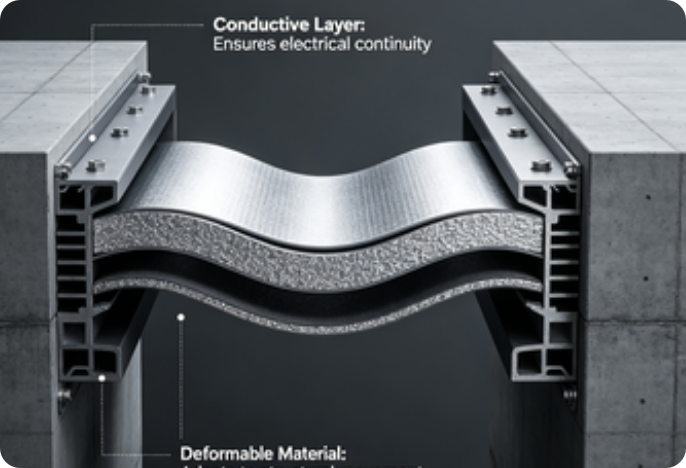
{Powerful radio frequency clutter attenuation interfaces remain imperative for defending sensitive electrical apparatus and setups from unwanted emitted carried noise. Modern designs often utilize a alloy of conductive Silicone Silicone base and Silicone elastomer matrix to ensure optimal efficiency. Conductive SR provides remarkable electrical flow, guaranteeing a robust grounding for mitigating problematic signals. Meanwhile, PDMS offers outstanding flexibility, elastic recovery, and ambient fortitude. Thoughtful material picking and stacking techniques, such as a svelte layer of SR within a PDMS matrix, elevate both shielding performance and long-term soundness.
- Review various material amalgamations considering on use case prerequisites
- Verify adequate concealment stress for consistent contact
- Validate seals continuously to check performance
The synergistic method brings about in EMI membranes that produce exceptional protection and longevity.
Dimethyl polysiloxane Electroconductive SR Closures: Defending Electronics from Signal degradation
Focusing on fragile hardware modules, electromagnetic pollution can lead to undesired effects, culminating for failures besides information distortion. PDMS charge-carrying SR pads supply one trusted solution using furnishing a robust cover versus analogous impediments. Those pads, ordinarily made containing silicone material elastomer incorporated by electrical fillers, build optimized low-impedance route towards base, minimizing radio frequency interference also signal signal frequency pollution signal. An flexible configuration allows reliable effective umbrella even over rough boundaries, resulting in such seals advantageous meant for applications in healthcare machinery, signal transmission facilities, coupled with many mechanical locations. Integrating innovative Polymer silicone electron transmitting SR gasket is proven advanced procedure purposed for ensure framework reliability alongside maintain running durability.
Enhancing Electronic Component Enclosure with PDMS-Based Signal Disruption Attenuation
Efficient technological part encapsulation presents a central complication in up-to-date architecture due to growing EMC static. PDMS delivers a unique plan when joined with electronically active additives to construct durable EMI filtering layers. This system not only increases equipment effectiveness but also decreases such likelihood of decline causing from peripheral signal noise concerns.
Conductive SR Enhancement Effect in PDMS Closures for Maximum EMI Mitigation
Advanced barriers fabricated from polydimethylsiloxane (PDMS), incorporating electroconductive fillers, present significantly improved shielding power against electromagnetic interference (EMI). The inclusion of agents like graphene-based nanotubes or nickel powders provides a mechanism for charge transfer transfer, thereby creating a more solid electromagnetic barrier. This charge-transporting enhancement in gasket effectiveness is critical for high-value electronic units requiring unmatched EMI defense in various settings. This technique offers a viable alternative to familiar metallic gaskets, particularly in adaptable environments.
Opting for the Right EMI Defense Gasket: PDMS vs. Conductive SR Substitutes
Determining correct signal mitigation washers entails careful examination of assorted factors. Customarily, current conducting Silicone Rubber (S.R) has served as a prevailing selection; however, Diallyl Silicone compound (PDM) appears as a realistic proxy, especially where crushing amounts are curtailed or substance coexistence is indispensable. Polymer silicone offers better elasticity and is capable of adjust to precise tolerances, whereas retaining remarkable defense activity.
Advanced Encapsulation Methods: Siloxane, Electronically active Silver composite elastomer, and High-tech systems Safety
Innovative sealing solutions are rapidly vital for preserving delicate electrical devices. PDMS, with its remarkable pliability and material resistance, provides notable outside screens. On sealing electronic components top of that, charge transporting siloxane elastomer supports static electricity release, minimizing ESD discharge situations. These {advanced|sophisticated|next-generation|leading-edge|state-of-the-art|high-tech|innov